IEEF and SBM ITB Strengthen Financial Literacy in Mertak Village, Central Lombok
“Bridging Local Potential, Financial Literacy, and Inclusive Economic Development”
Press Release
Lombok Tengah, Nusa Tenggara Barat, January 9–11, 2026
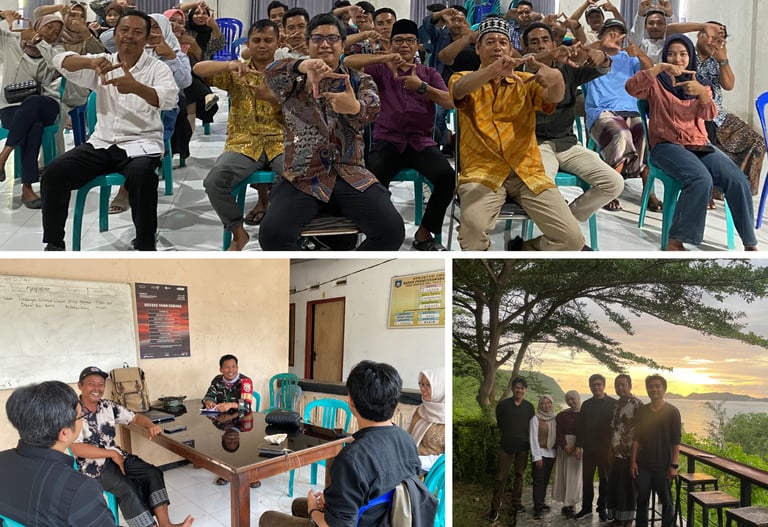
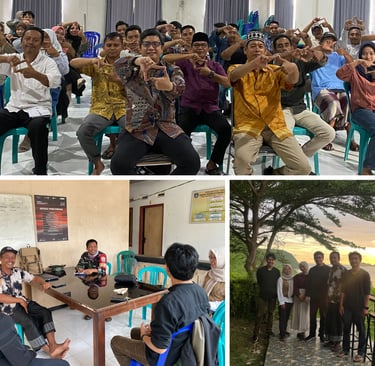
The Institute for Economy, Energy, and Finance (IEEF), in collaboration with the School of Business and Management, Institut Teknologi Bandung (SBM ITB), conducted a community development and financial literacy program in Desa Mertak, Kecamatan Pujut, Lombok Tengah. The program aimed to strengthen local economic capacity by enhancing financial literacy and supporting community-based economic activities in villages surrounding the Mandalika Special Economic Zone. The initiative was led by Ir. Dzikri Firmansyah Hakam, S.T., Pg.Dip., M.Sc., Ph.D., CFP®, a faculty member at SBM ITB and Executive Director of IEEF, together with Khairil Insan Bintang, M.Pd. and Ihda Farhatun Nisak, S.Pd., M.M. (UPI), as well as Anisya Nurfitri K., S.Pd., M.S.M. (Unpad). The collaboration reflects a cross-university effort to integrate academic knowledge, policy insight, and community engagement in addressing local development challenges.
The community engagement program was designed in response to the rapid development of the Mandalika tourism area, which has generated significant economic opportunities but has yet to deliver inclusive benefits to surrounding villages. Despite its strategic location near international tourism destinations and the Mandalika Circuit, Desa Mertak continues to face challenges in translating its natural and economic potential into tangible welfare improvements for local communities. Limited financial literacy and business management capacity remain key barriers preventing residents from fully participating in the regional economic transformation.
As part of the program, the IEEF–SBM ITB team conducted field surveys and socio-economic mapping to identify the village’s economic structure and development potential. The findings revealed that Desa Mertak’s economy is primarily supported by tourism, agriculture, fisheries, and livestock, with community-managed tourism assets such as Pantai Batu Berang, mangrove conservation areas, homestay programs, and boat rental services operated through Village-Owned Enterprises (BUMDes) and the Tourism Awareness Group (Pokdarwis). These initiatives demonstrate strong local ownership, yet require improved financial governance to ensure long-term sustainability.
The program also highlighted the structural gap between Desa Mertak’s strategic position as a Mandalika buffer village and the limited economic impact felt by its residents. This concern was echoed by Moh. Syahnan, Head of Desa Mertak, who emphasized that insufficient human resource capacity and financial literacy have constrained the community’s ability to capitalize on growing tourism flows, resulting in residents remaining largely spectators of regional development.
To address these challenges, the program delivered contextualized financial literacy training, covering household financial management, basic bookkeeping for small businesses, simple business planning, and the introduction of appropriate and low-risk investment instruments tailored to rural contexts. In line with IEEF’s mandate as a policy and economic research institute, the training integrated practical insights on inclusive economic development, ensuring that financial literacy serves as a foundation for sustainable local growth rather than short-term income generation. The program also focused on developing local financial literacy facilitators to support long-term knowledge retention within the community.
According to Ir. Dzikri Firmansyah Hakam, Ph.D., CFP®, financial literacy is a critical enabler for inclusive development in strategic economic zones. “The economic opportunities created by Mandalika are substantial. However, without financial management capabilities, local communities risk being excluded from these opportunities. Financial literacy empowers communities to actively participate in development and strengthens local economic resilience,” he stated.
To assess program effectiveness, the team implemented pre-test and post-test evaluations, which indicated a measurable increase in participants’ understanding and awareness of structured financial management and long-term planning. These results suggest that combining community-based engagement with evidence-informed economic perspectives—an approach central to IEEF’s work can generate meaningful capacity improvements at the village level.
Through this initiative, IEEF and SBM ITB reaffirm their commitment to bridging academic knowledge, policy insight, and community empowerment. The Desa Mertak program reflects a broader effort to promote inclusive, competitive, and sustainable local economic development, particularly in areas affected by large-scale strategic projects. Supported by LPDP, this collaboration underscores the role of universities and think tanks in ensuring that national development agendas translate into tangible benefits for communities at the grassroots level.
Copyright ©2025 IEEF all right reserved.
Empowering Sustainable Growth with Economic and Financial Insight
Jl. Ganesa Lb. Siliwangi, Kecamatan Coblong, Kota Bandung, Jawa Barat.


ieef@ieef.or.id