Ir. Dzikri Firmansyah Hakam, S.T., Pg.Dip., M.Sc., Ph.D. Highlights the Importance of Economic Growth That Benefits the Public on Kompas Bisnis KompasTV
Press Release
Jakarta, June 24, 2026
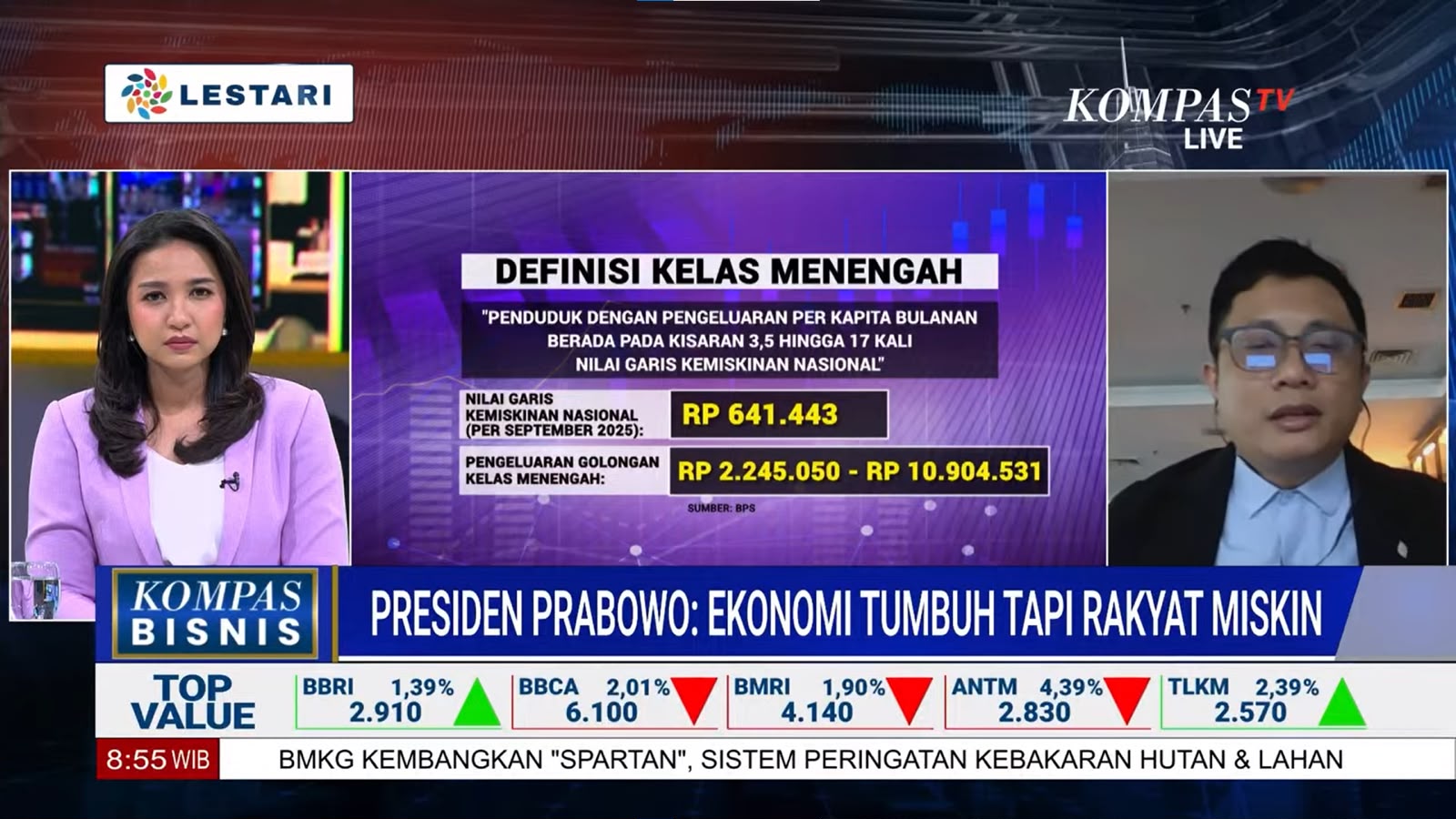
KompasTV invited Ir. Dzikri Firmansyah Hakam, S.T., Pg.Dip., M.Sc., Ph.D., an economist, faculty member at the School of Business and Management, Institut Teknologi Bandung (SBM ITB), also Executive Director of the Institute for Energy, Economics, and Finance (IEEF), as a speaker on Kompas Bisnis to discuss Indonesia’s economic growth, household purchasing power, and middle-class challenges.
In the discussion titled “Presiden Prabowo: Ekonomi Tumbuh Tapi Rakyat Miskin”, Dzikri explained that economic growth should be understood not only through macroeconomic indicators, but also through how it affects people’s daily lives. Growth needs to be reflected in stronger household purchasing power, more stable income, access to decent jobs, and greater opportunities for upward economic mobility.
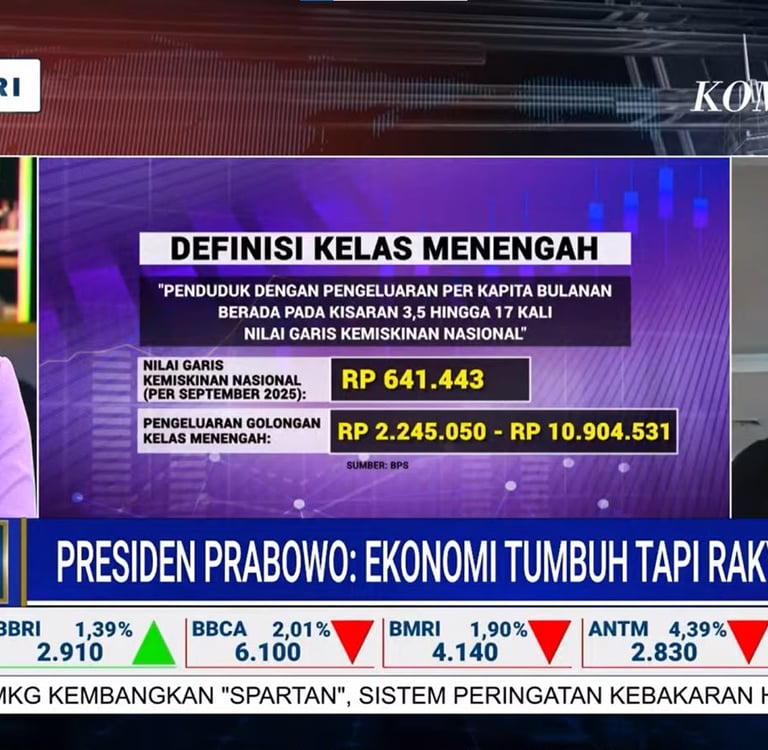
One of the key issues discussed was the decline in Indonesia’s middle-class population. Based on BPS data presented during the program, the number of middle-class citizens declined from 53.8 million people in 2021 to 46.7 million people in 2025. The middle class is defined as individuals with monthly per capita expenditure ranging from 3.5 to 17 times the national poverty line. With the national poverty line recorded at Rp641,443 per capita per month, the estimated middle-class expenditure range is between Rp2,245,050 and Rp10,904,531 per month.
According to Dzikri, the decline of the middle class is an important reminder that economic growth must be able to protect household purchasing power. When the cost of living rises, income growth remains limited, and consumption space becomes narrower, households that were previously considered middle class may become more economically vulnerable.
He also explained that economic policy should strengthen household resilience. This can be supported through the creation of productive jobs, stronger real-sector activity, better control of essential goods prices, improved quality of public spending, and programs that directly contribute to public welfare.
Through his appearance on KompasTV, Dzikri emphasized that the success of economic policy should not be measured only by growth figures, but also by how far that growth is felt by the public. Quality growth is growth that protects purchasing power, expands job opportunities, strengthens the middle class, and enables people to live more prosperous lives.
Watch the full discussion on KompasTV’s YouTube channel.
Copyright ©2025 IEEF all right reserved.
Empowering Sustainable Growth with Economic and Financial Insight
Jl. Ganesa Lb. Siliwangi, Kecamatan Coblong, Kota Bandung, Jawa Barat.


ieef@ieef.or.id