SBM ITB Economist Featured on Kompas TV to Discuss Indonesia’s Economic Developments
Press Release
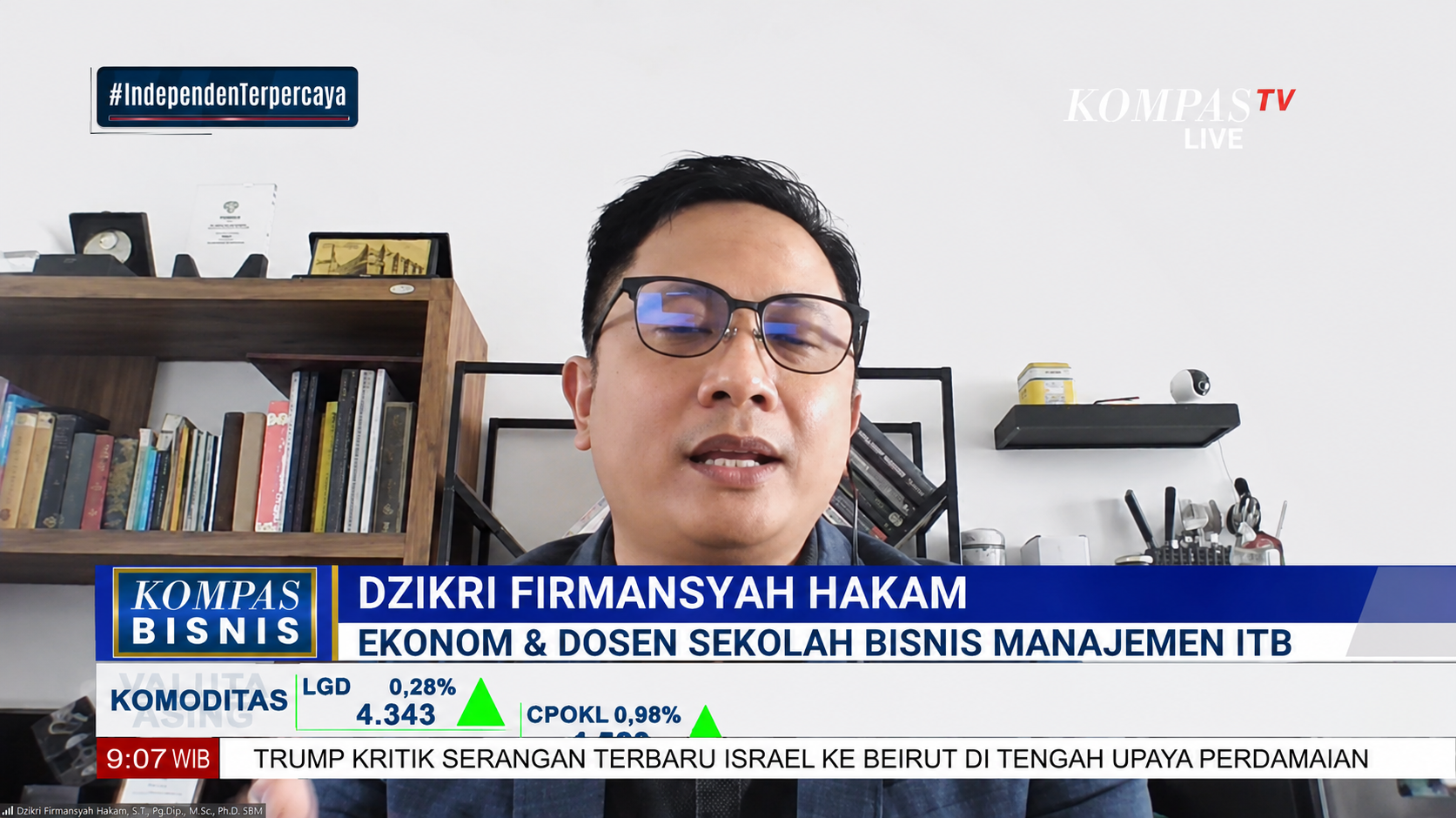
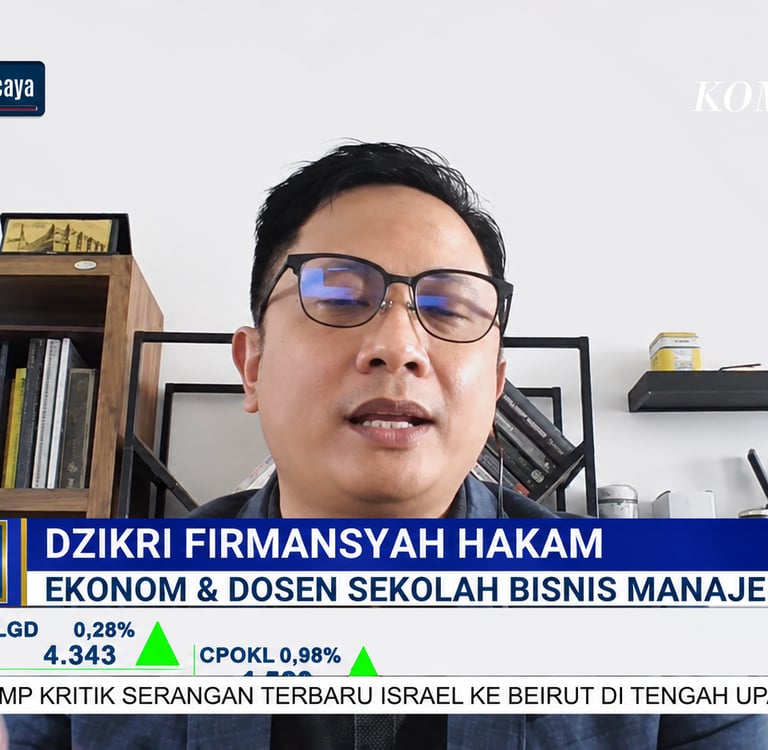
Jakarta, June 17, 2026
Kompas TV invited Ir. Dzikri Firmansyah Hakam, S.T., Pg.Dip., M.Sc., Ph.D., an economist, full-time faculty member at the School of Business and Management, Institut Teknologi Bandung (SBM ITB), and Executive Director of the Institute for Energy, Economics, and Finance (IEEF), to provide expert commentary on Indonesia’s latest economic developments, particularly the strengthening of the Rupiah, fiscal policy evaluation, energy price adjustment, monetary policy direction, and their implications for household purchasing power.
The discussion highlighted the recent appreciation of the Rupiah to the Rp17,700–Rp17,900 range per US dollar, which was positively received by financial markets. According to Ir. Dzikri, this strengthening should not be attributed solely to the government’s evaluation of major programs such as Makan Bergizi Gratis (MBG) and Koperasi Desa (Kopdes). Rather, it reflects a combination of external and domestic factors, including the weakening of the US dollar, improved attractiveness of Rupiah-denominated assets, foreign capital inflows into government securities and Bank Indonesia instruments, as well as policy communication from Bank Indonesia.
He emphasized that the evaluation of MBG and Kopdes served more as a positive signal of fiscal credibility than as the main driver of Rupiah appreciation. For investors, the move indicates that government priority programs are not treated as open-ended spending commitments. Instead, their scale, timing, governance, and effectiveness remain subject to evaluation when fiscal pressures increase. This is important as markets continue to assess whether Indonesia can balance its growth ambitions with sound public finance management.
The discussion also addressed the recent increase in Pertamax prices. Ir. Dzikri explained that the adjustment may help reduce indirect fiscal pressure when global oil prices and exchange rate movements increase fuel procurement costs. However, he underlined that the credibility of market-based fuel pricing depends not only on the government’s willingness to raise prices when costs rise, but also on its consistency in lowering prices when oil prices decline and the Rupiah strengthens. A transparent two-way pricing mechanism is essential to maintain public trust.
On inflation, he noted that a stronger Rupiah can help reduce imported inflation, particularly for energy, food, raw materials, and other goods priced in US dollars. However, the benefits will only be felt by the public if lower import costs are transmitted effectively into domestic prices. Without a responsive pricing mechanism, currency appreciation may remain a positive market indicator without immediately improving household purchasing power.
Regarding MBG and Kopdes, Ir. Dzikri stressed that evaluation does not mean discontinuation. Both programs have important social and economic objectives. MBG aims to improve nutrition while supporting local economic activity, while Kopdes seeks to strengthen village-based economic institutions. However, large-scale programs require strong governance, measurable outcomes, efficient budget execution, and clear accountability.
In relation to Bank Indonesia’s policy direction, Ir. Dzikri argued that BI should not rush to lower interest rates. The recent BI Rate increase to 5.50 percent has helped restore confidence in Rupiah assets. However, once exchange rate and inflation pressures are more firmly under control, gradual monetary easing may be considered to support consumption, investment, MSMEs, housing, and labor-intensive sectors.
Through his appearance on Kompas TV, Ir. Dzikri reaffirmed the importance of evidence-based economic analysis in understanding Indonesia’s macroeconomic direction. He emphasized that the ultimate success of current policy coordination should not only be measured by market confidence, but also by its ability to maintain price stability, protect purchasing power, create jobs, and strengthen Indonesia’s long-term economic resilience.
Copyright ©2025 IEEF all right reserved.
Empowering Sustainable Growth with Economic and Financial Insight
Jl. Ganesa Lb. Siliwangi, Kecamatan Coblong, Kota Bandung, Jawa Barat.


ieef@ieef.or.id